
When someone dies, many of us reach for softer words. We might say ‘passed away’, ‘gone’ or ‘lost’, especially when we’re talking to children.
It comes from a good place. We want to protect them. We want to make something painful feel a little less heavy.
But children don’t always understand these phrases in the way we expect. Instead of feeling comforted, they can end up feeling confused, or even a bit worried.
So it’s worth asking: are these softer words actually helping, or can they sometimes make things harder?
Why These Words Can Be Confusing for Children
Young children tend to understand language very literally. They make sense of the world by linking words to things they already know and recognise.
For example, if a child says, “I lost my school jumper,” they usually expect it to be found again. Maybe it turns up later on their peg in the cloakroom, or at the bottom of a bag. In their experience, ‘lost’ doesn’t mean gone forever.
It’s the same with other everyday words. If someone is ‘gone’, they often come back. If someone is ‘sleeping’, they wake up. These are patterns children see again and again.
So when we use these same words to talk about death, children naturally apply that same logic. They may expect the person to return, to be found, or to wake up.
This is where confusion can begin. The words suggest one thing, but the reality is very different.
Children aren’t misunderstanding on purpose. They are using what they already know to try to make sense of something new. Clear, simple language helps them do that with less confusion and fewer worries.
What Do We Mean When We Say Someone Has Died?
When we use the word ‘died’, we are giving children something clear and real to understand.
It can be as simple as this: when someone dies, their body has stopped working. They are not breathing, they are not thinking, and they are not feeling anything anymore. They can’t come back.
This might feel very direct to say, but for a child, it removes the uncertainty that softer language can create. It helps them understand what has happened, rather than trying to piece it together for themselves.
You might say:
“Grandad died. His body stopped working.”
“When someone dies, they can’t come back, but we can still remember them and talk about them.”
Said calmly and gently, this kind of explanation helps children feel more secure. They are not left wondering or waiting for something to change.
It also shows them that it is okay to talk about death openly, and to ask questions when they need to.
If you would like more guidance on how to approach these conversations, our free to download information sheets offer practical, accessible support for families and professionals. In particular, the ‘Explaining a death to young children’ sheet gives clear advice on using honest language, sharing information in a way children can understand, and allowing space for questions over time.
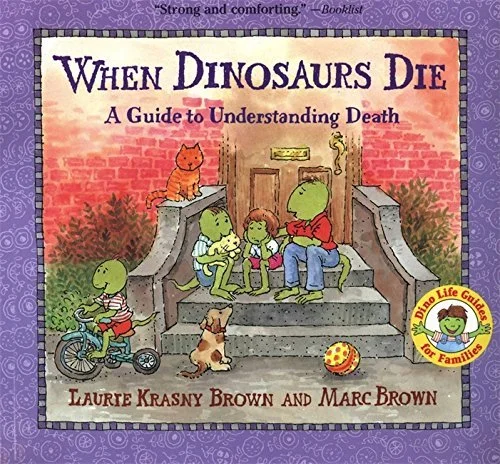
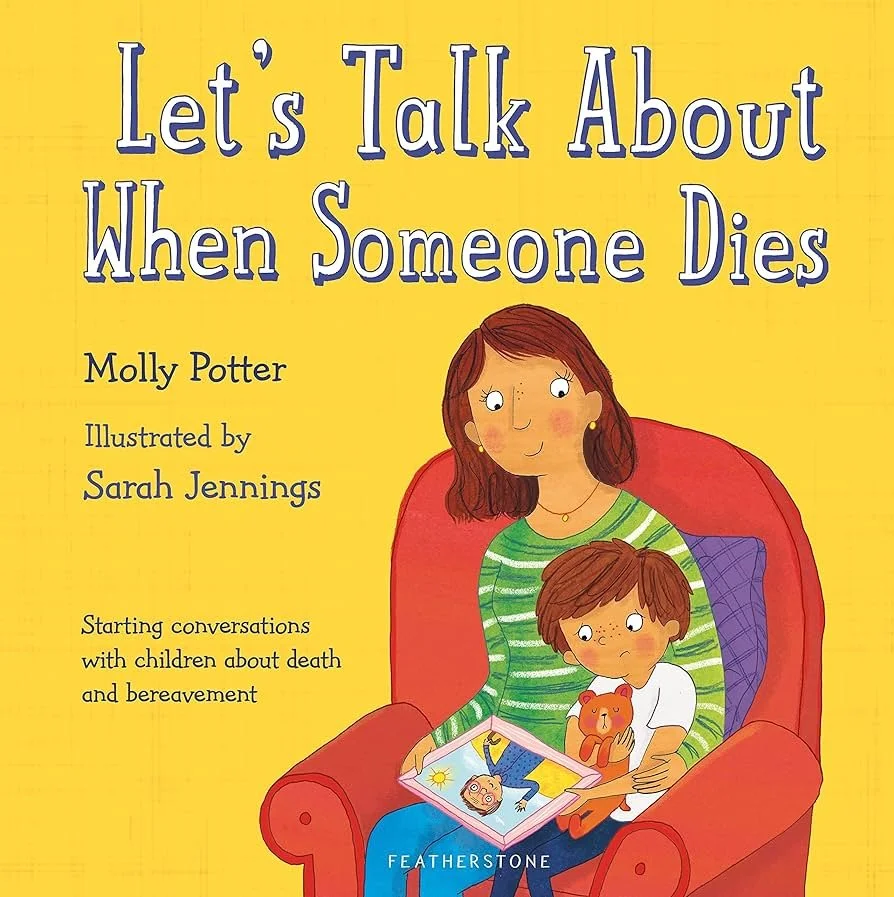
Sometimes, it can also help to use a book alongside these conversations. Stories can give children another way to understand what ‘died’ means, and to see that their feelings are shared by others.
For example:
When Dinosaurs Die: A Guide to Understanding Death by Laurie Krasny Brown and Marc Brown offers clear, simple explanations about what happens when someone dies and answers many of the questions children ask.
Let’s Talk About When Someone Dies by Molly Potter gently supports children to understand death while also helping them talk about their thoughts and feelings.
Used alongside honest, simple language, these kinds of resources can help children build a clearer understanding, at their own pace.
Will Everyone Who Gets Ill Die?
After hearing that someone has died, many children begin to worry about what this means for the people around them.
They might wonder:
“Will Mum die if she gets ill?”
“Will I die if I get poorly?”
These worries are very common, even if children don’t always say them out loud.
It helps to offer clear and gentle reassurance. You might say:
“Most people who get poorly get better again.”
“Doctors and nurses work very hard to help people get well.”
“The person who died was very, very ill, and their body couldn’t get better.”
This helps children understand that death doesn’t happen every time someone is unwell.
Being clear in this way can reduce unnecessary fear, while still being honest. It reassures children that everyday illnesses, like coughs and colds, are a normal part of life and that most people recover from them.
Children may need to hear this more than once. Repeating simple, calm reassurance helps them feel safer and more secure in their world.
It’s Not Just What You Say, It’s How You Say It
The words we choose are important, but the way we say them matters just as much.
Children are very aware of how adults are feeling. They notice tone of voice, facial expressions, and whether something feels calm or uncertain. Even clear explanations can feel overwhelming if they are rushed or tense.
Speaking slowly, calmly, and with warmth helps children feel safe. It shows them that, even though something sad has happened, they’re not alone in understanding it.
It can also help to share information in small pieces. Children often take things in gradually, coming back with questions over time. This is a normal part of how they process something new and difficult. (check out our blog post about Puddle Jumping, which explores this a bit more)
You don’t have to have all the answers. It’s okay to say, “I don’t know,” or “That’s a really good question.” What matters most is being open, honest, and willing to listen.
Some children will want to talk straight away. Others might not say much at all, and then return to it weeks later. Giving them time and space shows that this is something they can come back to whenever they need to.
Ultimately, it is not about getting every word exactly right. It is about helping children feel safe enough to understand, to ask questions, and to feel whatever they are feeling.
Clarity, Honesty and Care

Talking to children about death is never easy. It can feel uncomfortable to use a word like ‘died’, especially when you’re trying to protect them from something painful.
But in reality, using clear and simple language is one of the most important things you can do. It gives children something solid to understand, rather than leaving them to guess or worry.
When you combine that clarity with a calm voice, honest answers, and a bit of reassurance about their own safety, it helps children feel more secure. They begin to make sense of what’s happened in a way that feels manageable.
You don’t need to get the words exactly right. Most of us won’t! What matters most is being open, being truthful, and being there when children need to come back with questions.
In the end, it’s not about saying the perfect thing. It’s about helping children feel safe enough to understand what’s happened, and to know they’re not on their own in it.
You can reach out to the team directly if you need to talk things through. You can email info@guysgift.co.uk or call 0845 467 3035.
Sometimes it helps to speak to someone who understands.